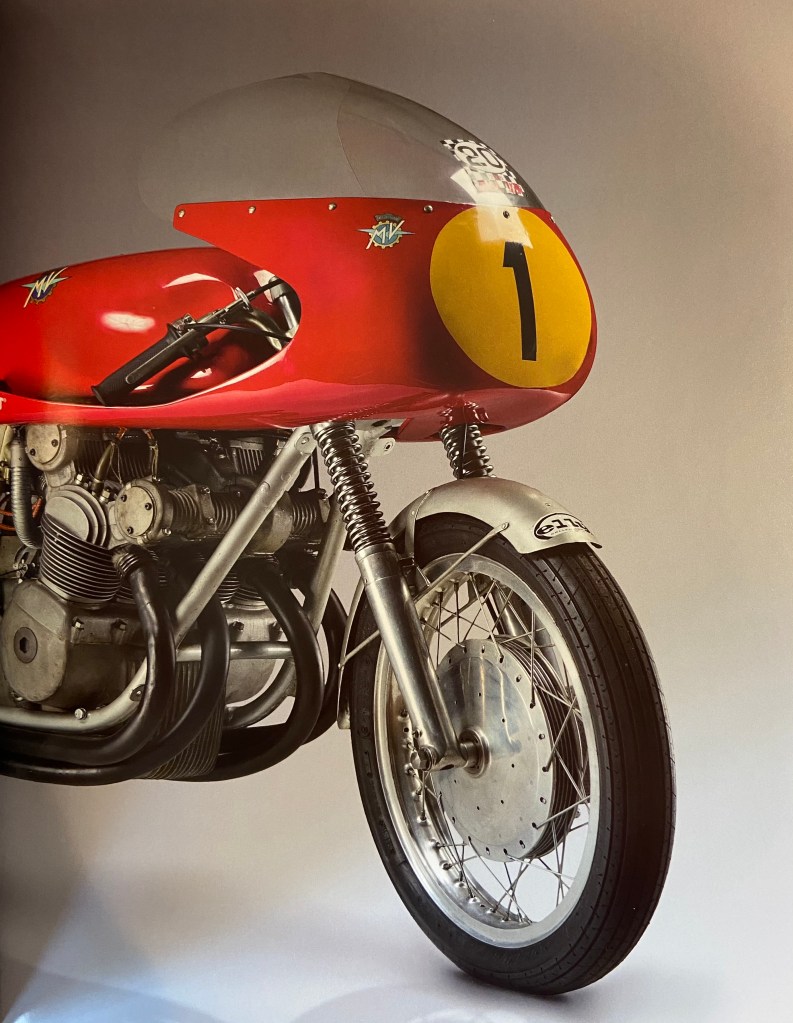
MV AGUSTA
500 4 cilindri Competizione
Italy – Verghera, VA
1957 (1952 – 66)
+ 210 Km/h
The 500 4 cylinders was born in 19500 with cordon joint transmission and a 48hp engine, 9.000 RPMs. In 1952 with the contribution of Leslie Graham, the model was set up with chain drive, chassis, and revised engine. Faster and more elastic in the transmission and precise in cycling, it is the first large-displacement MV to won hands down 9 Drivers World Championship and 9 “Marche” category Championship.
This model was brought to victory many times by John Surtees, world champion of class 500 in ’56, ’58, ’59, and ’60.
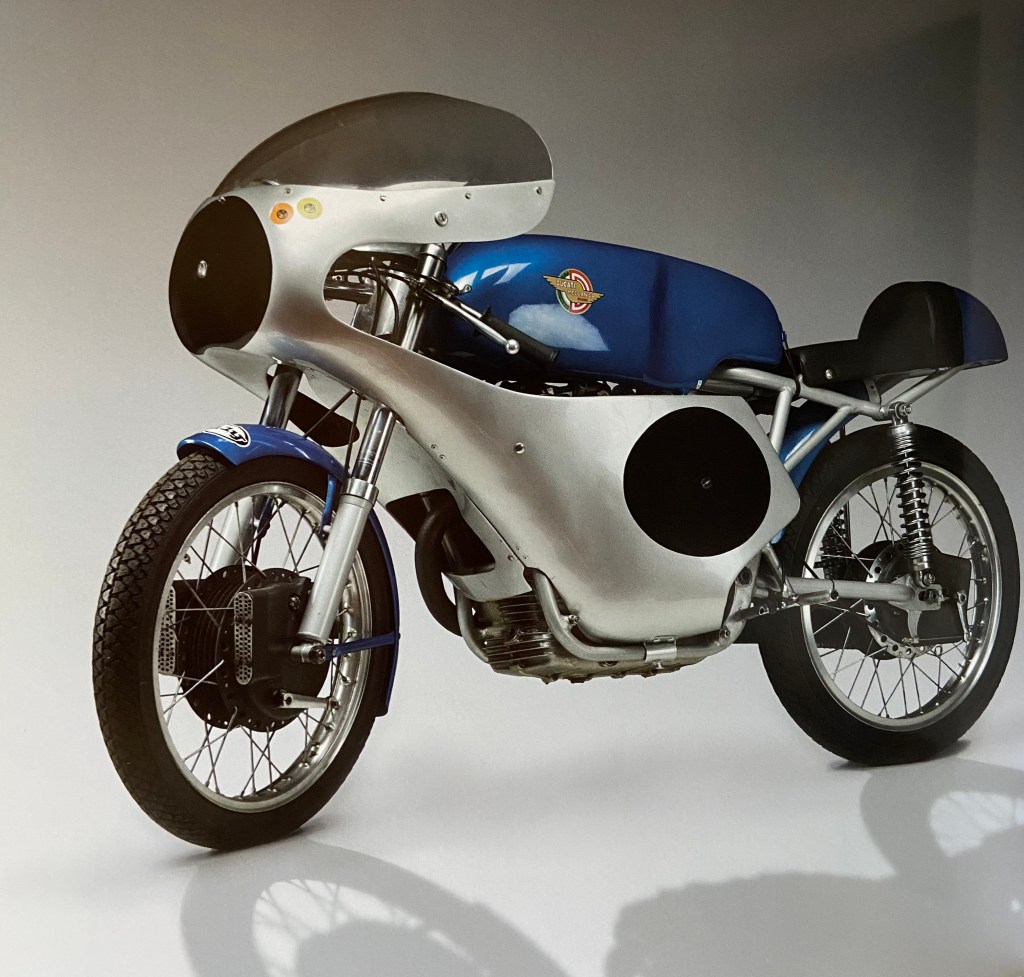
Ducati Meccanica
125 Bialbero Grand Prix
Italy – Bologna, BO
1958
+ 170 Km/h
In 1958, just four years from the arrival of the Eng. Fabio Taglioni, and soon after the Italian successes of the famous “Marianna”, Ducati started to win World Championship racing and the house did so thanks to the 125 Bialbero rich in cutting-edge technological solutions. After two significant victories (Belgium and Sweden), on the 14th September in the circuit of Monza, five of these bikes ended in the first five positions: they were driven in order of arrival by Bruno Spaggiari, Alberto Gandossi, Francesco Villa, Dave Chadwick, and Luigi Taveri. That year Gandossi lost the World Championship for a fall at the Grand Prix of Ulster a few turns from the finish line.
This specific model was led by Francesco Villa and conquered numerous important placements.
MV Agusta
350 3 cilindri Competizione
Italy – Verghera, VA
1962 – 72
≃ 260 Km/h
Born in 1966 with a simple increase in the bore of a 350 engine, the 350 3 cilindri was constantly improved and it became the maximum and mature expression of the refinement and reliability of the MV and the symbol of the Italian production of those glorious years. Heir of the aeronautical technology of the Agusta house, daughter of the passion and the wisdom hands of the most capable mechanic in the world, this motorcycle was the most winning of all times
Wisely conducted by Giacomo Agostini, it won uninterrupted from 1966 to 1972, seven World Championship “Marche” category titles and as many Work Championship Divers category titles. The duo Agostini – MV was invincible: still today, decades after, their extraordinary record of winning remains undefeated.

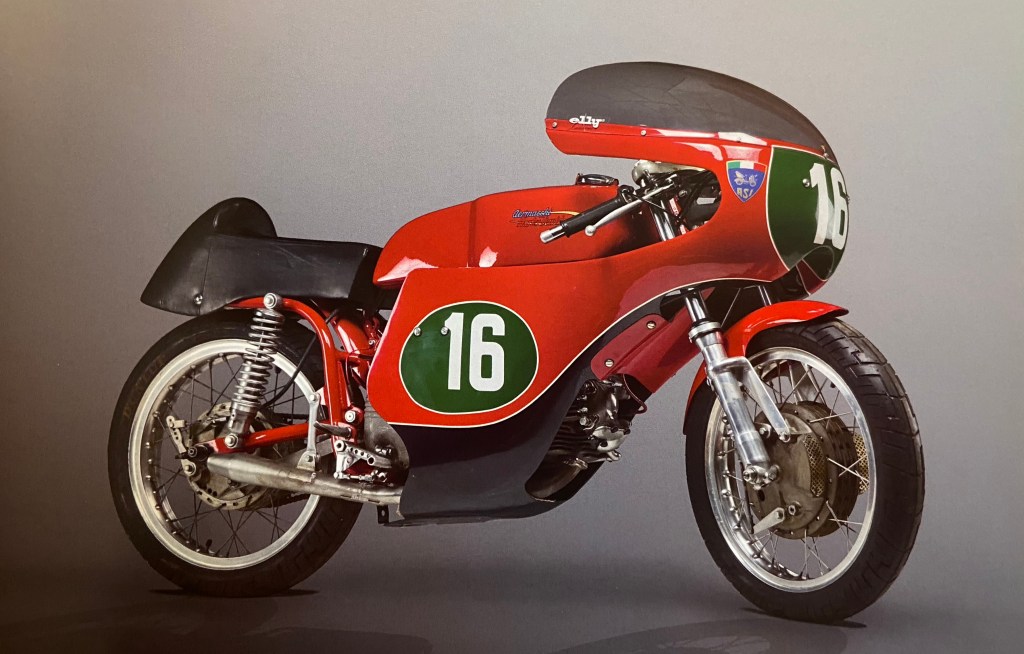
Aermacchi-Harley Davidson
259 Ala D’Oro GP
Italy – Verghera, VA
1964 (1961 – 72)
≃ 170 Km/h
Aermacchi was an aeronautical factory converted during the post-war for the production of motorcycles. It merged with the Harley Davidson in the first year of the 70s and after a three-wheeler (Macchi MB1), a prototype of a scooter (la Dama), and the futuristic Chimera, Aermacchi produced a series of mono cylinder racing bikes. The prefix “Ala” remained in all the models’ names due to their lightweight and assertiveness.
This model was in competitive races by private pilots and was used by Renzo Pasolini during his training sessions. It mounts a reduced exhaust for uphill races.
MV Agusta
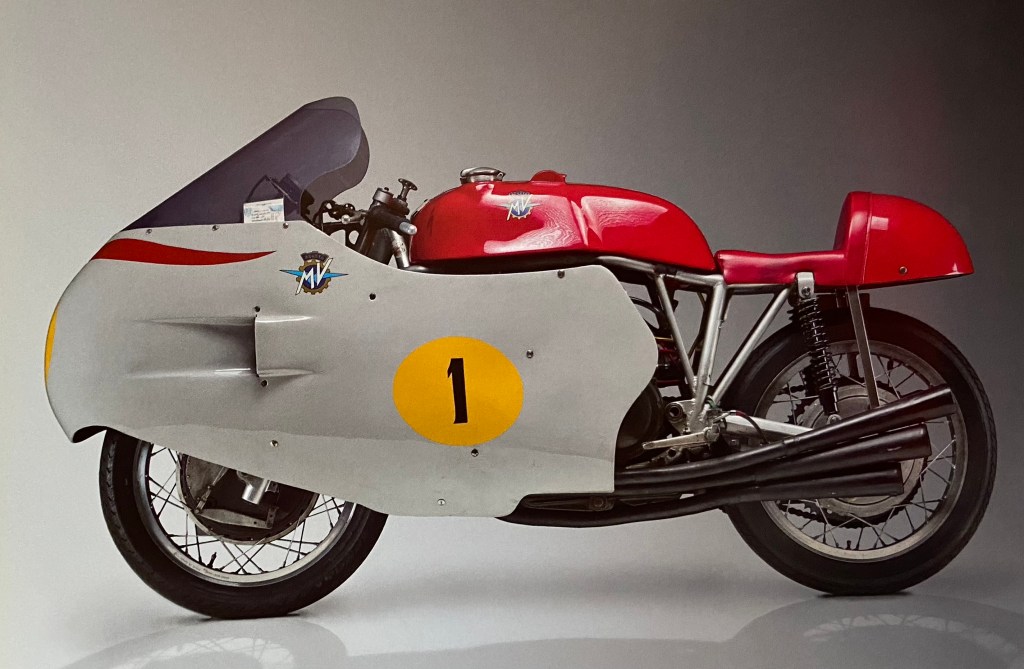
500 6 cilindri Competizione
Italy – Schiranna, VA
1958 (1952 – 66)
≃ 240 Km/h
Always at the forefront for its technological solutions and pioneering bravery, the MV tried the not-so-easy path of the six cylinders. After a test performed by the mythical John Surtees, then in overwhelming rise, this model was led into the competition by John Hartle at Monza in 1958. This peculiar wraparound and aerodynamic bodywork was studied on purpose for a fast Lombard track. The bike was very promising, from its debut it reached the notable speed of 240km/h. But, as always happens in the racing world, the other Houses did not follow the challenge of a six-cylinder engine, probably too expensive and demanding. The MV as well ended up storing this astonishing purosangue in the dream warehouse.
Yamaha
FZR 750 R (OW01)
Japan, Iwata
1989 (1989 – 92)
+ 250 Km/h
Just as the evolution of individuals and societies occurs more often by sudden jumps, when new factors arise creating the conditions for a substantial change, even in the history of technology, the products that mark a definitive qualitative leap often appear from nothing.
The FZR marks one of these epochal steps. Generous street replica of the racing YZF 750, it encloses a decisive combination of technological innovations: a combustion chamber with a five-valve head, the super-light titanium connecting rods, the “Exup” exhalations system (it analyses the pressure of the exhaust gas and compensates for suction) and, above all, the perimeter chassis Delta Box, a very rigid aluminum structure that grants an unmatched precision.

MV Agusta
350 4 cilindri Competizione
Italy – Verghera, VA
1976 (1971 – 76)
+ 240 Km/h
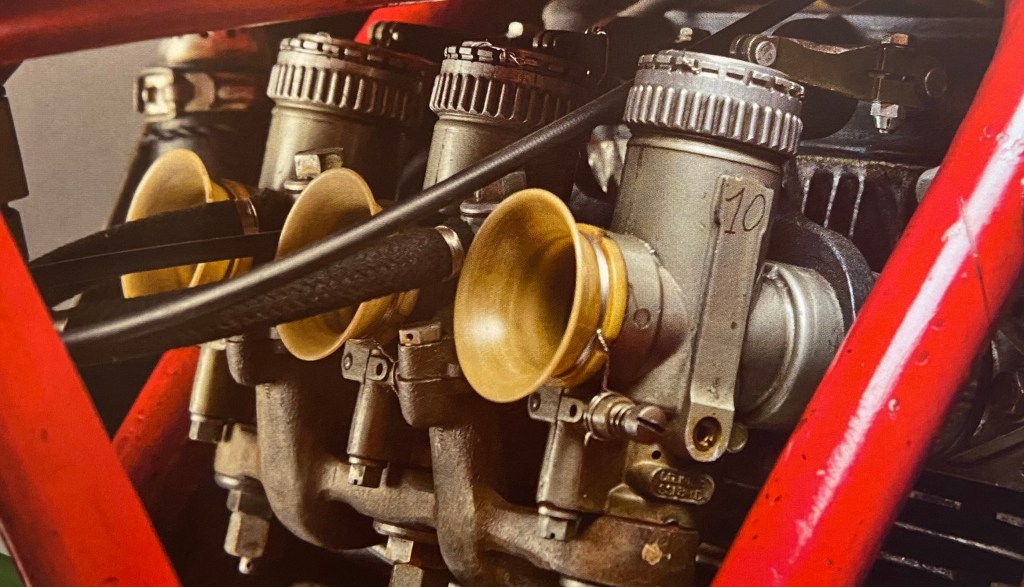
The beautiful “Canzonetta” of the Cascina Costa house, the 350 4 cilindri was born to face the resentful Japanese advanced, that in the first years of the 70s was nearer and nearer menacing the glorious 3 cylinders. The MV team decided to increase the power, growing the numbers of the cylinders from three to four and raising the RPMs.
The model made its debut shortly after the death of Domenico Agusta, and it won the Grand Prix of the Nation led by Alberto Pagani. It has a power of 70hp but it does not excite. After several further improvements, it still succeeded in conquering the World Championship in the “Marche” category 1972 and Drivers category in 1973.
In 1974 the ownership found a public partner in EFIM which, after less than three years in command, decided to retire the most prestigious motorcycles brand from the competitions to the astonished amazement of the fans.
The model here is the last version of 1976, equipped with alloy wheels and Kroeber electronics. Driven by Giacomo Agostini, the same year it won at Assen and Mugello. It was the last MV seen on the competitive tracks.

MV Agusta
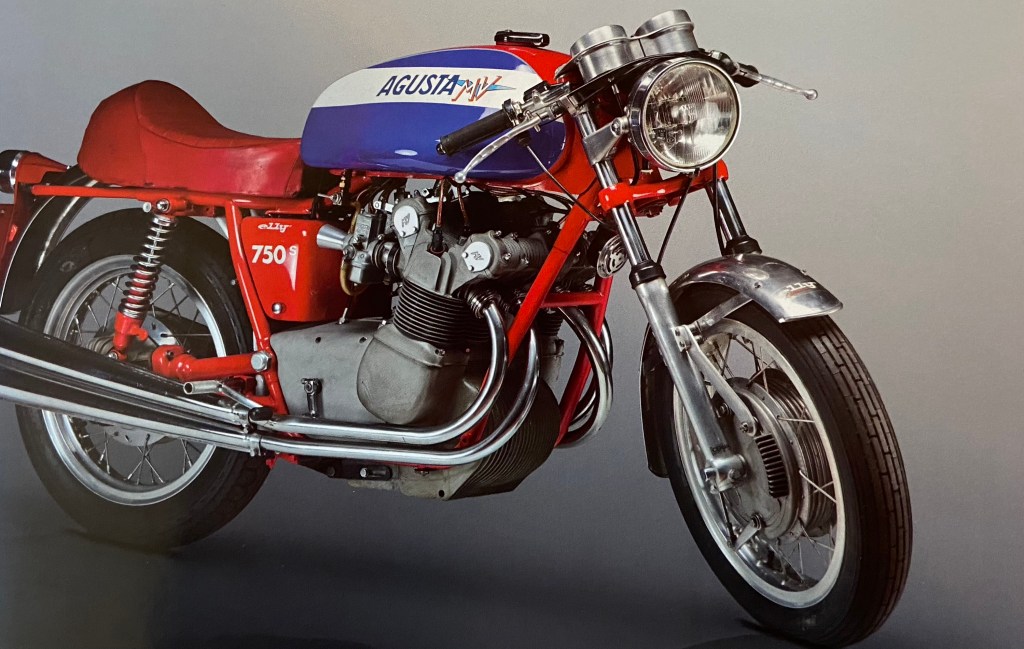
750 sport
Italy – Verghera, VA
1971 (1971 – 77)
+ 200 Km/h
The 750 Sport was born as an evolution of the more elegant and elite 600, which was not very successful perhaps due to its tranquil character as a quiet pachyderm. It was based on the same engine, suitably upgraded, and increased in displacement; a sporty lighter and more streamlined chassis were then set up.
The intention was to satisfy the passionate public. By then, the brand MV was associated with victories and triumphs. Buying an MV meant identifying themselves with great champions and that specific lifestyle.
Fast and aggressive, however, it cost as a car (circa two million of the old lira) and in seven years only 350 models were sold. It was the last MV to be mass-produced before the hose liquidation in 1977.
© 2022 EllyCollection | Powered by EllyCollection – All rights reserved.
The material on this site may not be reproduced, distributed, transmitted or otherwise used, except with prior permission of the website’s administrators.
Writing and photos from “La storia di un rombo” Ghigo Roli, Barbara Brevi, Massimo Cirulli ©2011 Artioli Editore.
 elly-collection.com